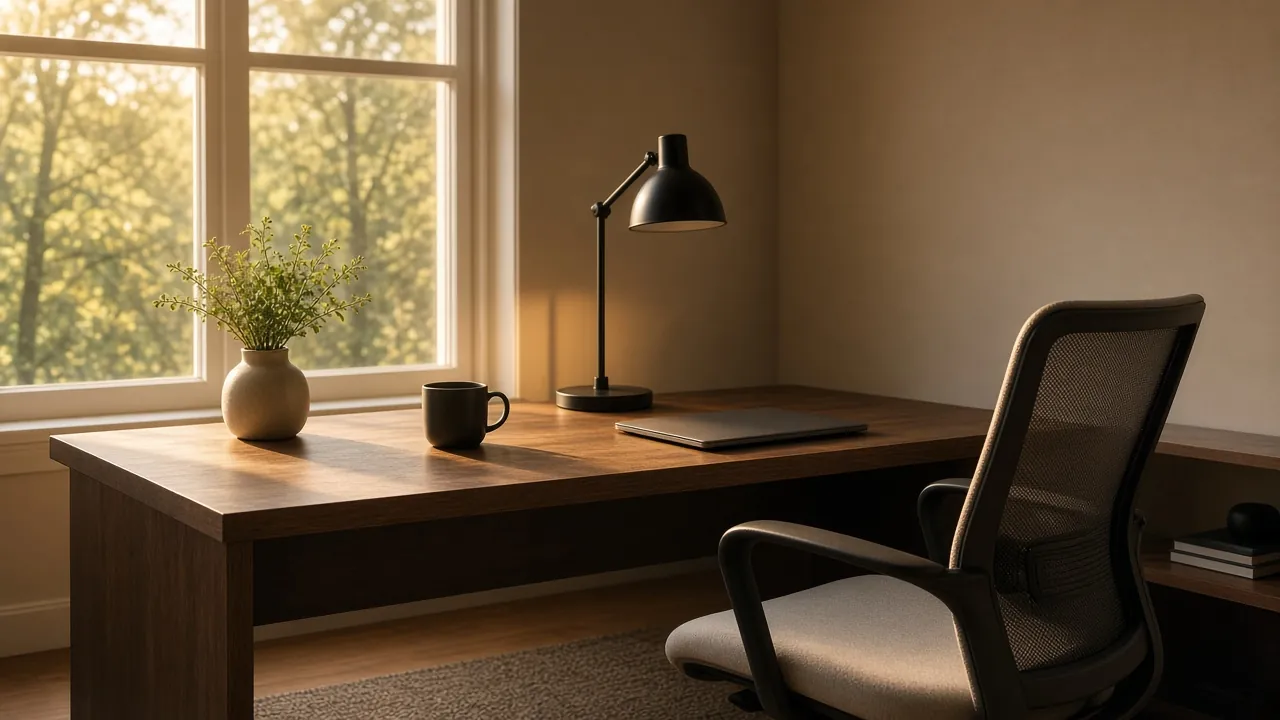
In the evolving landscape of remote work, your home office isn't just a place to get tasks done; it's a sanctuary for focus, creativity, and well-being. While we often obsess over monitor size, chair ergonomics, and keyboard feel, one of the most powerful, yet often overlooked, elements of a truly optimised workspace is natural light. Harnessing the power of the sun isn't just about making your space look pretty; it's a fundamental aspect of human health, directly impacting your mood, sleep cycles, eye comfort, and overall productivity. Let's explore deep into how you can strategically position and equip your home office desk to maximise the benefits of natural light, transforming your workday for the better.
Disclosure: Our guides are researched from the public sources we cite; we don't carry out hands-on product testing.
The Undeniable Power of Natural Light: More Than Just Illumination
Before we dive into the 'how-to', it's crucial to understand the 'why'. Natural light isn't merely a brighter alternative to artificial bulbs; it's a vital component of our biological clock and psychological well-being. Think of it as a free, always-on wellness tool:
- Circadian Rhythm Regulation: Exposure to natural light, especially in the morning, signals to your body that it's daytime, helping to regulate your sleep-wake cycle. This leads to better quality sleep at night and increased alertness during the day.
- Reduced Eye Strain: Artificial light, particularly cool-toned fluorescent or LED lights, can contribute to eye strain, headaches, and general discomfort. Natural light provides a more balanced spectrum, reducing these symptoms.
- Improved Mood and Reduced Stress: Sunlight exposure promotes the production of serotonin, a neurotransmitter associated with feelings of well-being and happiness. Less gloominess leads to a more positive work environment.
- Enhanced Productivity and Cognitive Function: Studies have shown that workspaces with ample natural light lead to higher levels of alertness, concentration, and even better performance on cognitive tasks.
- Vitamin D Synthesis: While most of us aren't directly sunbathing at our desks, incidental exposure to UV rays (even through windows) can contribute to Vitamin D synthesis, crucial for bone health and immune function.
Given these profound benefits, treating natural light as a secondary consideration in your home office setup would be a missed opportunity. It's time to elevate its status to a primary design principle.
Phase 1: Strategic Desk Placement – Your Foundation for Illumination
The single most impactful decision you'll make regarding natural light is where you place your desk. This isn't just about fitting it into a corner; it's about understanding the sun's path and your room's orientation.
The Ideal Scenario: Parallel to the Window
If possible, position your desk so that your monitor screen is perpendicular to the window, meaning you are either facing parallel to the window (looking out the side) or your back is to the window (looking away from it). This orientation minimizes direct glare on your screen and prevents awkward shadows from falling on your workspace.
- Facing Perpendicular (Side-on): This is arguably the most preferred setup. The natural light washes over your workspace from the side, providing consistent, soft illumination without directly hitting your eyes or screen. You get the benefit of the view without the distraction of glare.
- Back to the Window: While less ideal than the side-on approach, having the window behind you can work, provided you have effective glare control. The light illuminates your face, which is good for video calls, but can cause reflective glare on your screen. More on mitigating this later.
The Glare Traps: What to Avoid
There are two setups that generally lead to significant problems and should be avoided if possible:
- Directly Facing the Window: Sitting with your monitor directly facing a window means constant backlight issues. Your screen will appear dim, your eyes will be constantly adjusting to the bright light behind it, and you'll experience severe eye strain. Your face will also be silhouetted on video calls, which isn't ideal.
- Window Behind You (Without Glare Control): While we mentioned this can work, if you don't have proper blinds or curtains, the light from a window directly behind you will bounce off your screen, creating a mirror-like reflection that makes it nearly impossible to see your work clearly.
Considering Room Orientation and Time of Day
The sun's path changes throughout the day, and its intensity varies with the season. Here's a quick guide to common room orientations:
- North-Facing Windows: Offer consistent, indirect, and soft light throughout the day. This is often considered ideal for a workspace as it provides stable illumination with minimal harsh glare.
- South-Facing Windows: Receive direct, intense sunlight for most of the day, especially in winter. While bright, this can lead to heat gain and significant glare. Excellent for brightness, but requires robust glare control.
- East-Facing Windows: Provide beautiful, bright morning sun. This is fantastic for waking up and boosting morning productivity. However, by midday, the light diminishes. Good for early birds.
- West-Facing Windows: Deliver intense, warm afternoon and evening sun. This can be challenging for working due to strong glare and heat gain in the late afternoon. Requires significant glare management.
Understand your room's orientation to anticipate the light conditions throughout your workday. This will inform your placement and your need for supplementary glare control.
Phase 2: Glare Control – Taming the Sun's Intensity
Even with optimal desk placement, direct sunlight can be too intense at certain times of day, causing glare and heat. Effective glare control is crucial for maintaining comfortable and productive light levels.
Window Treatments: Your First Line of Defence
Invest in high-quality window treatments that allow you to modulate light without completely blocking it out.
- Sheer Curtains or Blinds: These are excellent for diffusing harsh direct light into a softer, more even glow. They cut down on glare without making the room feel dark. Look for light-filtering roller blinds, cellular shades, or sheer linen curtains.
- Adjustable Blinds (Venetian or Vertical): These offer precise control over the angle and intensity of light entering the room. You can tilt the slats to direct light upwards or away from your screen.
- Blackout Blinds (with a caveat): While great for sleeping, blackout blinds can make your home office feel like a cave. Use them sparingly, perhaps only during peak glare hours, and opt for options that allow you to raise them completely when not needed.
- Top-Down/Bottom-Up Shades: These are a fantastic solution, allowing you to let light in from the top of the window while maintaining privacy or blocking glare at eye level.
Anti-Glare Monitor Screens and Hoods
Even with excellent window treatments, some residual glare might persist, especially if your back is to a window or you have multiple light sources. Consider these tech-centric solutions:
- Anti-Glare Coatings: Most modern monitors come with an anti-glare matte finish. Ensure yours does, or consider external anti-glare screen protectors.
- Monitor Hoods: These are physical attachments that shield your monitor from ambient light, similar to the hoods used by photographers. They effectively reduce reflections and improve contrast, especially in bright rooms.
Strategic Use of Plants and Furniture
Believe it or not, your decor can play a role in light management:
- Indoor Plants: Larger plants strategically placed near windows can diffuse and soften incoming light. They also boost mood and air quality!
- Furniture Arrangement: Avoid placing reflective surfaces directly opposite windows. Glass-top desks or highly polished surfaces can bounce light around, creating additional glare. Opt for matte finishes where possible.
Phase 3: Supplementary Artificial Lighting – Bridging the Gaps
While natural light is king, it's not always available or sufficient. A well-designed artificial lighting plan works in harmony with natural light, providing consistent illumination throughout the day and into the evening.
Layered Lighting: The Key to Flexibility
Think about your artificial lighting in layers:
- Ambient Lighting: This is your general room illumination, typically from overhead fixtures. Aim for soft, diffused light that fills the space. A ceiling fixture with a dimmer switch is ideal.
- Task Lighting: This is crucial for your desk. A good desk lamp should provide focused light on your immediate workspace, reducing shadows and eye strain. Look for lamps with adjustable brightness and colour temperature.
- Accent Lighting: This isn't strictly necessary for productivity but can enhance the mood and aesthetic. Think of a small lamp on a bookshelf or an uplight in a corner.
Colour Temperature: Mimicking the Sun
Light's 'colour' is measured in Kelvin (K). Understanding this helps you choose bulbs that feel natural and supportive of your workday:
- Warm White (2700K-3000K): Similar to incandescent bulbs or late afternoon sun. Good for relaxation, but can make you feel sleepy during work hours.
- Cool White/Neutral White (3500K-4500K): Closest to natural daylight for much of the day. This is often recommended for home offices as it promotes alertness and focus without being overly harsh.
- Daylight (5000K-6500K): Very bright, bluish-white light, similar to natural midday sun. While excellent for tasks requiring high precision, it can be too intense for prolonged use and disrupt sleep patterns if used late in the evening.
Recommendation: For your ambient and task lighting, consider smart bulbs or lamps that allow you to adjust the colour temperature throughout the day. Start with cooler white (around 4000K-5000K) in the morning and gradually shift to warmer tones (3000K-3500K) as evening approaches to support your circadian rhythm.
Ergonomic Desk Lamps: Features to Look For
- Adjustability: The lamp head and arm should be easily adjustable to direct light precisely where you need it.
- Dimmer Function: Essential for matching light levels to the ambient natural light.
- Wide Lumens/Even Spread: Ensures your entire workspace is evenly lit without hot spots or harsh shadows.
- Minimal Glare: Look for lamps with diffusers or shades that prevent direct light from hitting your eyes.
Phase 4: Integrating Ergonomics and Eye Health Practices
Optimising natural light isn't a standalone effort; it integrates smoothly with overall ergonomic principles and eye health best practices.
The 20-20-20 Rule
Even in a perfectly lit office, your eyes need breaks. Every 20 minutes, look at something 20 feet away for at least 20 seconds. This helps your eye muscles relax and reduces digital eye strain.
Monitor Brightness and Contrast
Adjust your monitor's brightness to match the ambient light in your room. If your screen is too bright or too dim compared to its surroundings, your eyes have to work harder. Many operating systems have automatic brightness adjustment features or 'Night Light' modes that reduce blue light in the evenings.
Frequent Breaks and Movement
Step away from your desk regularly. Take a short walk, stretch, or simply stand by a window and look outside. This not only refreshes your eyes but also your mind and body.
Putting It All Together: Your Natural Light Home Office Checklist
Ready to transform your workspace? Use this checklist as you optimise your home office desk for peak natural light:
- Assess Your Room's Orientation: Understand how sunlight enters your space throughout the day.
- Strategic Desk Placement: Aim to position your desk perpendicular to your primary window.
- Invest in Glare Control: Choose appropriate blinds, shades, or curtains to diffuse or block harsh light.
- Consider Monitor Solutions: Utilise anti-glare screens or monitor hoods if necessary.
- Layer Your Artificial Lighting: Combine ambient, task, and accent lighting for flexibility.
- Mind Colour Temperature: Select bulbs that support alertness during the day and relaxation in the evening.
- Prioritise an Ergonomic Desk Lamp: Ensure it's adjustable, dimmable, and provides even light.
- Incorporate Eye Health Habits: Practice the 20-20-20 rule and take regular breaks.
- Declutter and Reflect: Minimise reflective surfaces on your desk.
- Embrace Biophilia: Add some plants to soften light and boost mood.
Optimising your home office desk for natural light is one of the most cost-effective and impactful improvements you can make. It's an investment in your health, your mood, and ultimately, your output. By thoughtfully considering placement, glare control, and supplemental lighting, you'll create a workspace that not only looks great but actively supports a healthier, more productive you. Say goodbye to the dimly lit dungeon and hello to a bright, invigorating home office experience!
Sources and further reading
Official and primary sources covering the topics in this article:
- College of Optometrists: background on eye health and screen use.
- HSE: working safely with display screen equipment: background on UK workstation and screen rules.
- NHS: repetitive strain injury: background on causes and prevention of RSI.
Frequently asked questions
What should you know about the Undeniable Power of Natural Light: More Than Just Illumination?
Before we dive into the 'how-to', it's crucial to understand the 'why'. Natural light isn't merely a brighter alternative to artificial bulbs; it's a vital component of our biological clock and psychological well-being.
What should you know about Phase 1: Strategic Desk Placement – Your Foundation for Illumination?
The single most impactful decision you'll make regarding natural light is where you place your desk. This isn't just about fitting it into a corner; it's about understanding the sun's path and your room's orientation.
What should you know about Phase 2: Glare Control – Taming the Sun's Intensity?
Even with optimal desk placement, direct sunlight can be too intense at certain times of day, causing glare and heat. Effective glare control is crucial for maintaining comfortable and productive light levels.
What should you know about Phase 3: Supplementary Artificial Lighting – Bridging the Gaps?
While natural light is king, it's not always available or sufficient. A well-designed artificial lighting plan works in harmony with natural light, providing consistent illumination throughout the day and into the evening.
Related Articles
Last updated: 2026-04-25 · Fact-checked by editorial team
Content Attribution: All content on Home Office Desk Setups is original. External sources are attributed where applicable. Trademarks belong to their respective owners.